

观看描述Visual Description
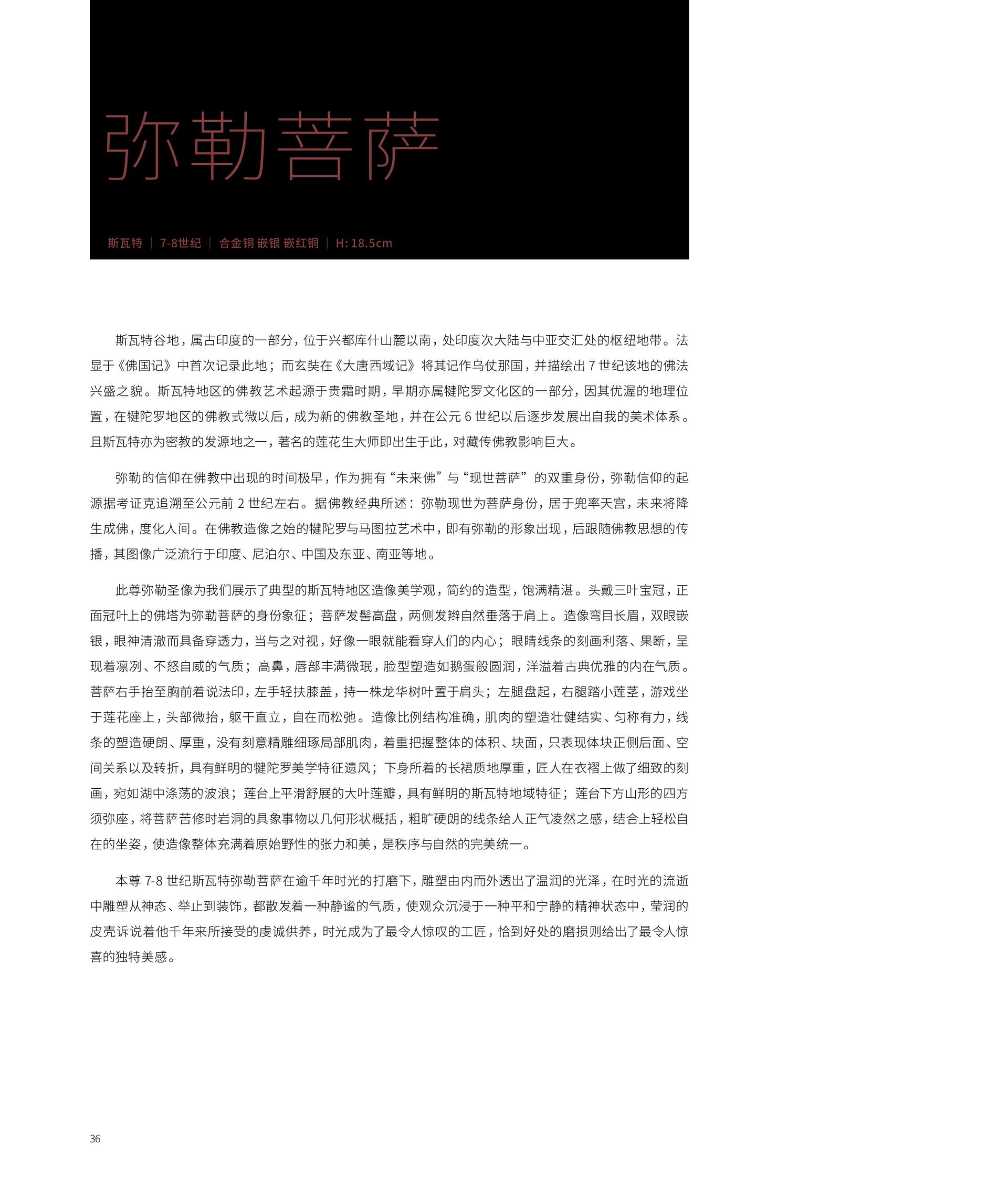
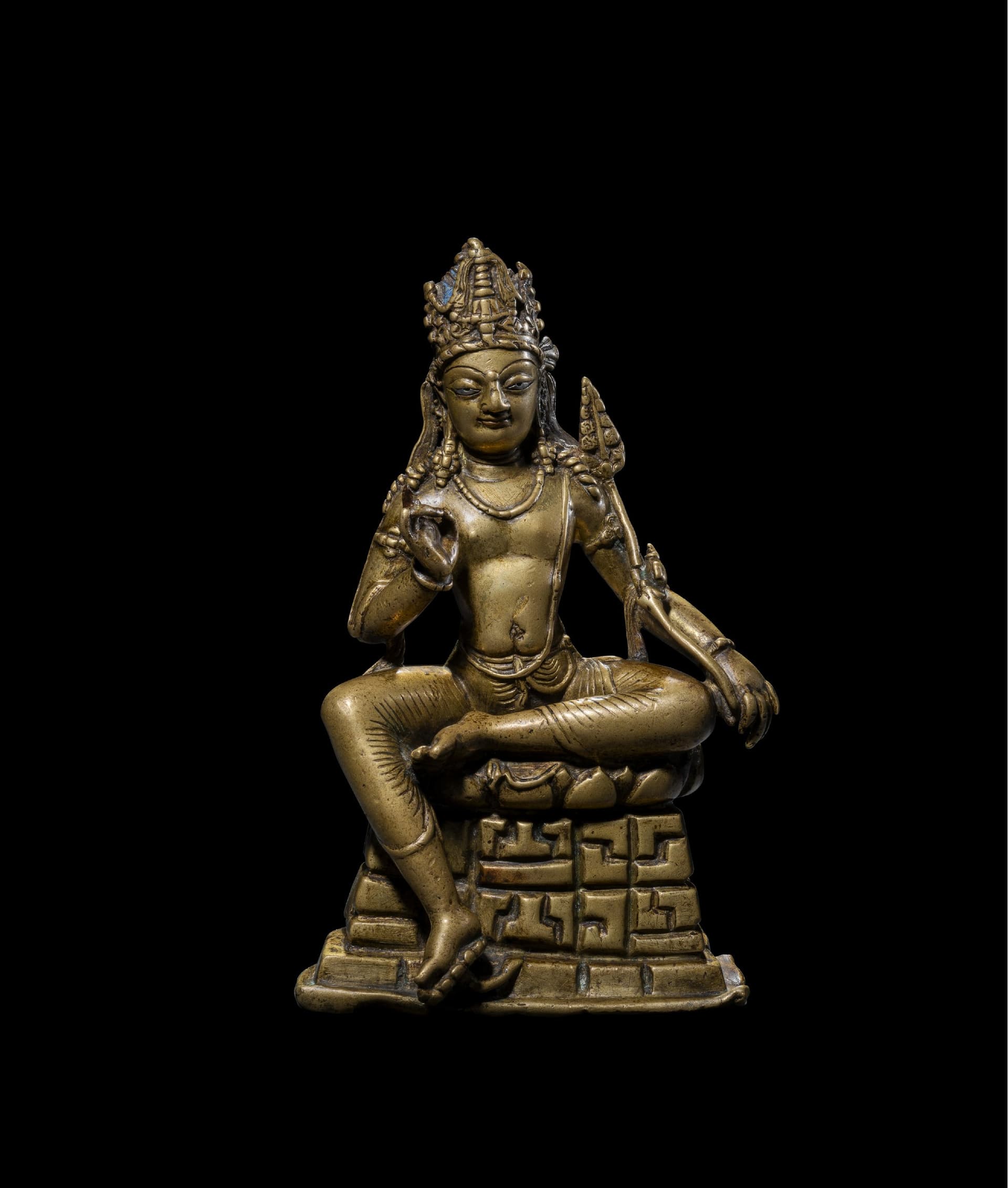
斯瓦特谷地,属古印度的一部分,位于兴都库什山麓以南,处印度次大陆与中亚交汇处的枢纽地带。法显于《佛国记》中首次记录此地;而玄奘在《大唐西域记》将其记作乌仗那国,并描绘出 7 世纪该地的佛法兴盛之貌。斯瓦特地区的佛教艺术起源于贵霜时期,早期亦属犍陀罗文化区的一部分,因其优渥的地理位置,在犍陀罗地区的佛教式微以后,成为新的佛教圣地,并在公元 6 世纪以后逐步发展出自我的美术体系。且斯瓦特亦为密教的发源地之一,著名的莲花生大师即出生于此,对藏传佛教影响巨大。
The Swat Valley, historically part of ancient India, is situated south of the foothills of the Hindu Kush mountains, occupying a pivotal nexus zone at the convergence of the Indian subcontinent and Central Asia. Faxian first documented this region in his *Record of Buddhist Kingdoms* (Foguo Ji), while Xuanzang, in his *Records of the Western Regions of the Great Tang* (Datang Xiyu Ji), referred to it as the Kingdom of Udyana and vividly portrayed the flourishing state of Buddhism in the area during the 7th century.
展览Exhibitions
竹瑾居2023年展览
Zhu Jin Ju Exhibition 2023
北京嘉德艺术中心
Guardian Art Center, Beijing
2023年
出版Publications
竹瑾居2023年展览图录
Zhu Jin Ju: 2023 Exhibition Catalogue
2023年
第36页
Page 36
2023年展览封面展品
2023 Exhibition Cover Piece
图录中的这件作品 In the Catalogue
竹瑾居|喜马拉雅艺术 2023 展览图录
Zhu Jin Ju: Himalayan Art | 2023 Exhibition Catalogue
第 36 页 · p. 36
翻到此页阅读 Open at this page →