


左右滑动查看 · 点按放大 Swipe · Tap to enlarge
图 / Images 2–4 · 局部 · Details点击图片放大 · Click to enlarge
观看描述Visual Description
现代的我们,每天会看见很多文字。它们从屏幕上出现,停一会儿,就会被新的消息推走。有些话在当时看来可能觉得要紧,但只要一不记录,过几天也就找不到了。
十三世纪的人,面对文字却可能有另一种心情。
在古代,有人会先把纸做得厚而坚韧,涂上深色,再在上面铺出平整的黑色书写区。随后,抄经人研磨黄金和白银,调成可以运笔的金汁、银汁,一笔一画写下佛经。
Today, we live amid an endless flow of text. Words appear on our screens, linger for a moment, and are quickly swept aside by the next message. Even the words that matter are often left unsaved, until, a few days later, they will have vanished altogether.
For someone in the thirteenth century, the written word held a significance we can scarcely imagine today.
In earlier times, paper was first made thick and durable, coated in a dark pigment, and worked into a smooth black surface for writing.
来源Provenance
Dalton Somaré,米兰。
With Dalton Somaré, Milan.
柏林私人收藏。
Private collection, Berlin.
展览Exhibitions
竹瑾居2026年展览
Zhu Jin Ju Exhibition 2026
北京嘉德艺术中心
Guardian Art Center, Beijing
2026
出版Publications
竹瑾居2026年展览图录
Zhu Jin Ju 2026 Exhibition Catalogue
2026年
第166–173页
pp. 166–173
图录中的这件作品 In the Catalogue
竹瑾居|喜马拉雅艺术 2026 展览图录
Zhu Jin Ju | Himalayan Art: 2026 Exhibition Catalogue
第 166–173 页 · pp. 166–173
翻到此页阅读 Open at this page →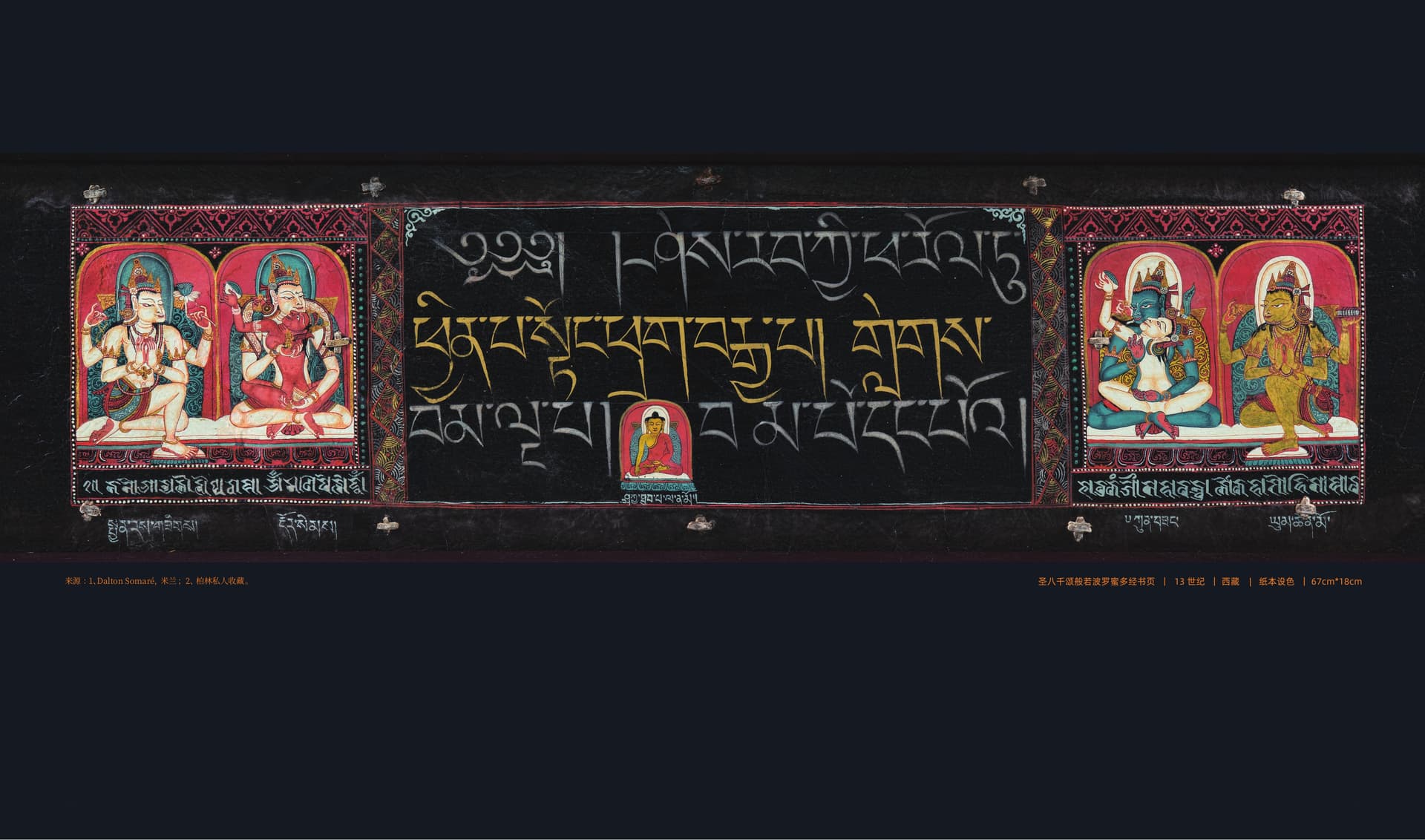
 佛手Buddha's Hand西藏,13世纪 · 合金铜 · 56 cmTibet, 13th century · Copper alloy · 56 cm可洽询Available
 普巴金刚橛Vajrakilaya Phurba西藏,13世纪 · 合金红铜、合金黄铜、铁 · 28 cmTibet, 13th century · Copper alloy, brass alloy, iron · 28 cm已洽购Acquired
 萨迦班智达·贡噶坚赞肖像Portrait of Sakya Pandit Kunga Gyaltsen西藏,13世纪 · 红铜鎏金、嵌银、嵌红铜、嵌宝石 · 8.5 cmTibet, 13th century · Gilt copper, inlaid with silver, copper, and gemstones · 8.5 cm可洽询Available
 藏式木箱Painted Wooden cabinet西藏,18世纪 · 木质、棉布、绘彩 · 100 cm × 37.5 cm × 49.5 cmTibet, 18th century · Wood, cotton cloth, polychrome paint · 100 × 37.5 × 49.5 cm已洽购Acquired佛手Buddha's Hand西藏,13世纪 · 合金铜 · 56 cmTibet, 13th century · Copper alloy · 56 cm可洽询Available普巴金刚橛Vajrakilaya Phurba西藏,13世纪 · 合金红铜、合金黄铜、铁 · 28 cmTibet, 13th century · Copper alloy, brass alloy, iron · 28 cm已洽购Acquired萨迦班智达·贡噶坚赞肖像Portrait of Sakya Pandit Kunga Gyaltsen西藏,13世纪 · 红铜鎏金、嵌银、嵌红铜、嵌宝石 · 8.5 cmTibet, 13th century · Gilt copper, inlaid with silver, copper, and gemstones · 8.5 cm可洽询Available藏式木箱Painted Wooden cabinet西藏,18世纪 · 木质、棉布、绘彩 · 100 cm × 37.5 cm × 49.5 cmTibet, 18th century · Wood, cotton cloth, polychrome paint · 100 × 37.5 × 49.5 cm已洽购Acquired佛手Buddha's Hand西藏,13世纪 · 合金铜 · 56 cmTibet, 13th century · Copper alloy · 56 cm可洽询Available普巴金刚橛Vajrakilaya Phurba西藏,13世纪 · 合金红铜、合金黄铜、铁 · 28 cmTibet, 13th century · Copper alloy, brass alloy, iron · 28 cm已洽购Acquired萨迦班智达·贡噶坚赞肖像Portrait of Sakya Pandit Kunga Gyaltsen西藏,13世纪 · 红铜鎏金、嵌银、嵌红铜、嵌宝石 · 8.5 cmTibet, 13th century · Gilt copper, inlaid with silver, copper, and gemstones · 8.5 cm可洽询Available藏式木箱Painted Wooden cabinet西藏,18世纪 · 木质、棉布、绘彩 · 100 cm × 37.5 cm × 49.5 cmTibet, 18th century · Wood, cotton cloth, polychrome paint · 100 × 37.5 × 49.5 cm已洽购Acquired