


左右滑动查看 · 点按放大 Swipe · Tap to enlarge
图 / Images 2–3 · 局部 · Details点击图片放大 · Click to enlarge
观看描述Visual Description
看一尊人物肖像,我们几乎本能地会问一句:像不像?
这个问题听起来再自然不过。摄影出现以后,我们已经习惯把肖像理解成一个人的视觉存档:眼睛多大,鼻子什么形状,胖还是瘦,脸上的皱纹在哪里。于是,一尊古代人物肖像如果五官鲜活、身体比例真实,我们就很容易进一步判断:这个人在生前,大概就是长这个样子。
借由眼前的这尊帕木竹巴· 多吉杰布肖像,也许会为我们更近一步地理清这个问题。
When we look at a portrait, we almost instinctively wonder if the actual person looked like it.
Nothing could sound more natural. Since the advent of photography, we have grown accustomed to understanding portraiture as a visual record of an individual: the size of the eyes, the shape of the nose, whether the person was heavy or thin, where the wrinkles fell on the face. As a result, when an ancient portrait sculpture presents vivid features and plausible bodily proportions, we readily conclude that the person in question must have looked much as depicted.
展览Exhibitions
竹瑾居2026年展览
Zhu Jin Ju Exhibition 2026
北京嘉德艺术中心
Guardian Art Center, Beijing
2026
出版Publications
竹瑾居2026年展览图录
Zhu Jin Ju 2026 Exhibition Catalogue
2026年
第196–201页
pp. 196–201
图录中的这件作品 In the Catalogue
竹瑾居|喜马拉雅艺术 2026 展览图录
Zhu Jin Ju | Himalayan Art: 2026 Exhibition Catalogue
第 196–201 页 · pp. 196–201
翻到此页阅读 Open at this page →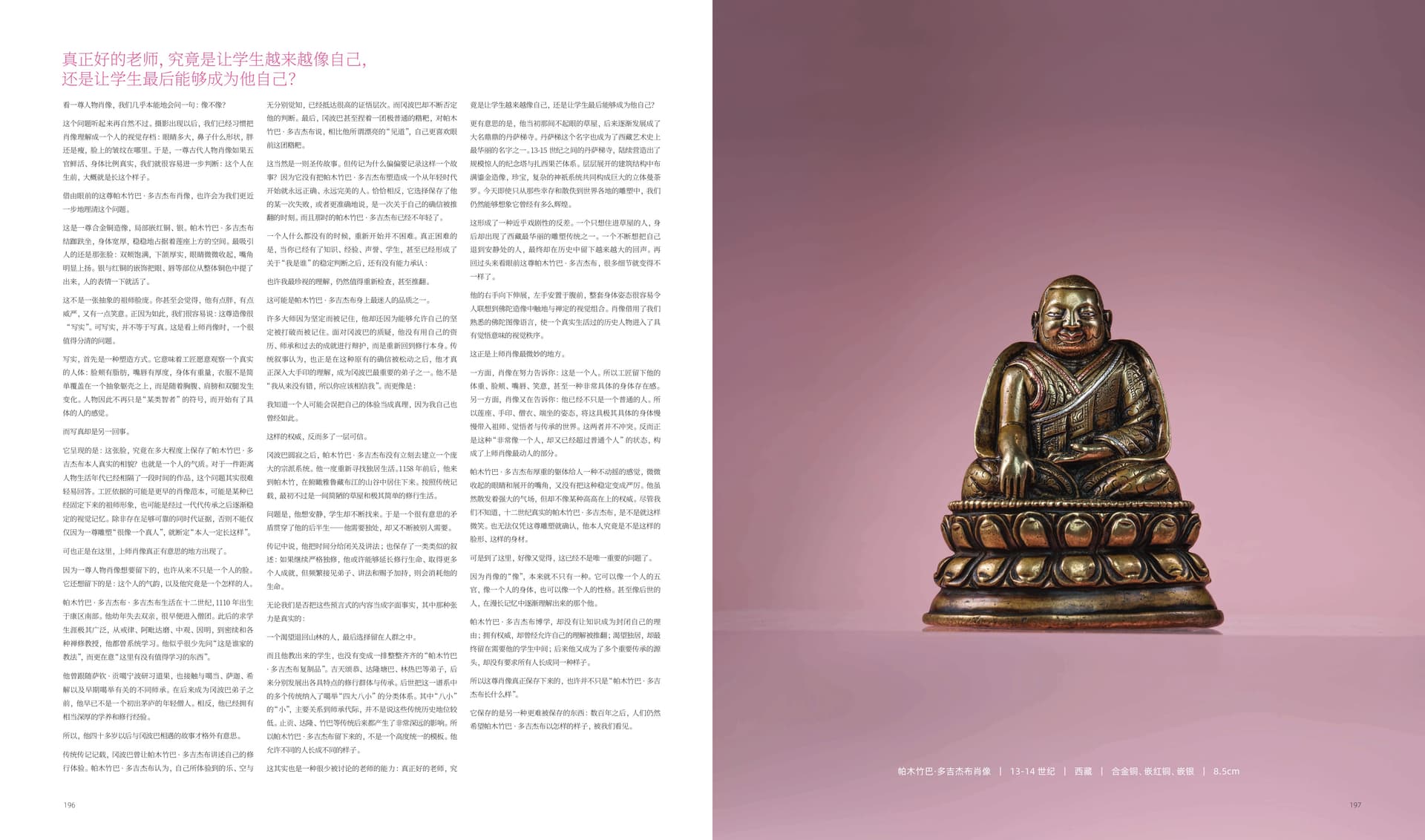
 佛手Buddha's Hand西藏,13世纪 · 合金铜 · 56 cmTibet, 13th century · Copper alloy · 56 cm可洽询Available
 萨迦班智达·贡噶坚赞肖像Portrait of Sakya Pandit Kunga Gyaltsen西藏,13世纪 · 红铜鎏金、嵌银、嵌红铜、嵌宝石 · 8.5 cmTibet, 13th century · Gilt copper, inlaid with silver, copper, and gemstones · 8.5 cm可洽询Available
 上师肖像Portrait of a Lama西藏,14世纪 · 银质、嵌金 · 7.4 cmTibet, 14th century · Silver with gold inlay · 7.4 cm可洽询Available
 释迦牟尼Shakyamuni Buddha西藏,14世纪 · 红铜鎏金 · 40 cmTibet, 14th century CE · Gilt copper · 40 cm可洽询Available